
SEO, AEO & GEO
AEO vs SEO vs GEO: What Is the Difference and Which One Should You Focus On?
Three acronyms are now circulating in the SEO industry: SEO, AEO, and GEO. They describe different optimization targets within the broader landscape of search visibility. Understanding which one does what, and which...
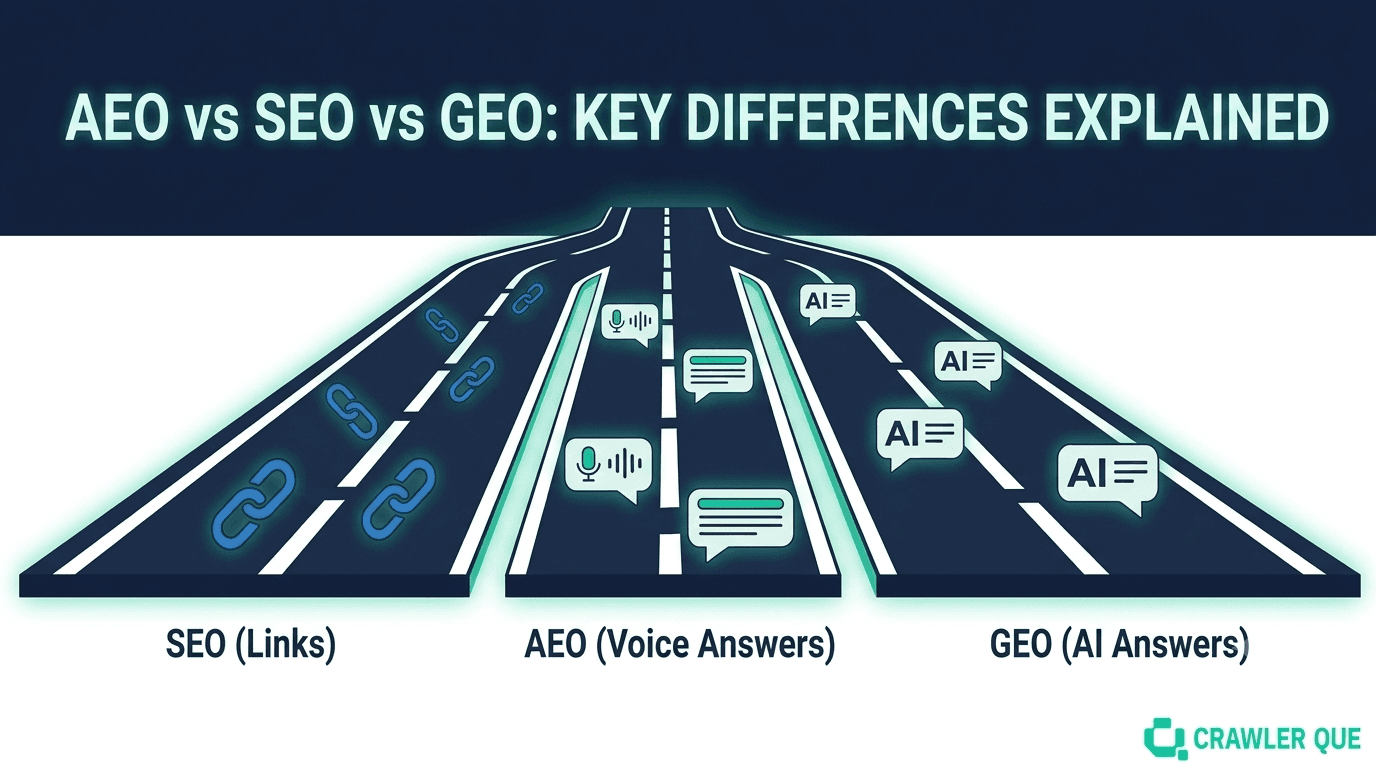
Three acronyms are now circulating in the SEO industry: SEO, AEO, and GEO. They describe different optimization targets within the broader landscape of search visibility. Understanding which one does what, and which combination you should be investing in, is the practical question this post answers.
SEO = rank in Google. AEO = appear in featured snippets and voice answers. GEO = get cited inside AI-generated responses from ChatGPT, Perplexity, and Gemini. You need all three in 2026, and they share most of the same foundation.
SEO: Search Engine Optimization
SEO is the practice of improving a website's visibility in traditional search engine results pages (SERPs). The primary target is Google, though Bing and others are relevant for some markets. Success is measured by ranking position, appearing on page one for target keywords, and by the organic traffic those positions generate.
Core signals: technical site health, on-page content relevance, backlink authority, page experience (Core Web Vitals), and keyword alignment.
What it does not cover: Featured snippets, voice search, AI-generated answers, and chat-based query surfaces like ChatGPT or Perplexity.
AEO: Answer Engine Optimization
AEO is the practice of structuring content to appear as the direct answer in zero-click search experiences: Google's featured snippets ("position zero"), knowledge panels, voice search responses (Google Assistant, Siri, Alexa), and similar answer-box formats.
Core signals: structured Q&A content, clear heading hierarchy, concise direct answers at the top of pages, FAQPage schema, and HowTo schema.
What it does not cover: AI model citations in chat interfaces like ChatGPT or Perplexity, which have their own answer generation logic.
GEO: Generative Engine Optimization
GEO is the practice of positioning your brand as the go-to source that AI generative models reference when answering questions in your category. The target platforms include visibility on ChatGPT, Perplexity, Gemini, Claude, Grok, and Google AI Overviews.
Core signals: entity clarity (consistent brand identity across the web), third-party citations, structured data (Organization, FAQPage schemas), direct-answer content format, and organic SEO performance as a foundation.
What it does not cover: Traditional ranking position in blue-link search results, though strong organic performance directly supports GEO.
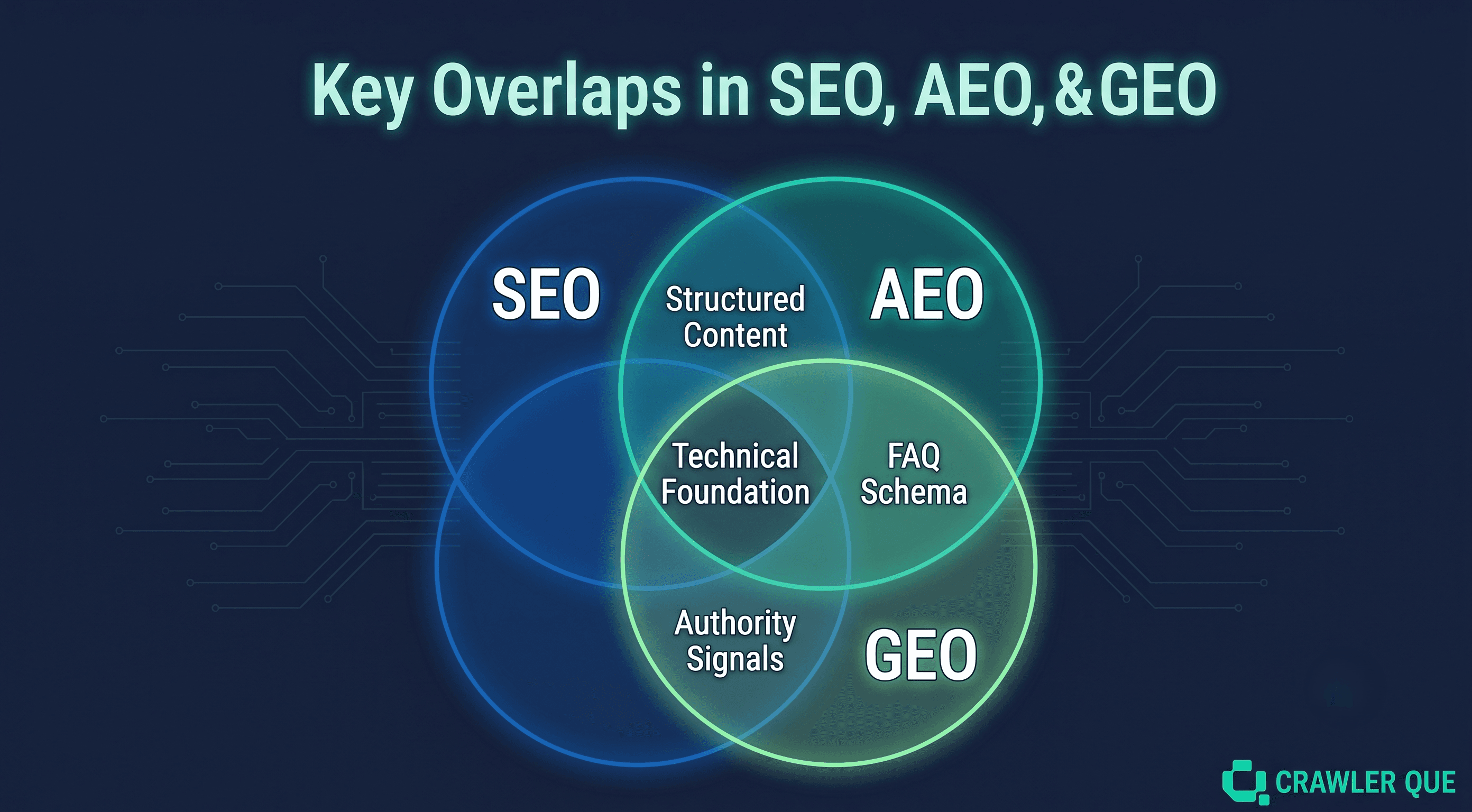
How They Overlap
| Signal | Helps SEO | Helps AEO | Helps GEO |
| Technical SEO (crawlability, speed, structure) | Direct | Foundation | Foundation |
| Quality content that answers questions | Direct | Direct | Direct |
| FAQPage schema | Indirect | Direct | Direct |
| Organization schema | Indirect | Indirect | Direct |
| Backlinks from authority sites | Direct | Indirect | Indirect |
| Third-party review presence (G2, Capterra) | Indirect | No | Direct |
| Concise direct-answer paragraphs | Indirect | Direct | Direct |
Which One Should You Focus On in 2026
The honest answer is: all three, starting with SEO as the foundation, then layering AEO and GEO signals on top. The reason is that GEO and AEO improvements largely fail without a solid SEO base, AI models source from content that is technically sound, well-structured, and already performing in organic search.
The order of operations:
Fix technical SEO first: crawlability, page speed, Core Web Vitals, meta structure. This is the foundation everything else requires.
Add structured data: FAQPage, Organization, and HowTo schemas. These serve AEO (featured snippets) and GEO (AI citations) simultaneously.
Restructure key pages for direct answers: content that begins with a concise answer before expanding detail performs in snippets and AI responses.
Build third-party presence: review platforms, directories, editorial mentions. This is where GEO diverges from traditional SEO most significantly.
Measure AI visibility: use a tool that actively tests whether your brand appears in AI answers, so you can track improvement over time.
Crawler Que's AI Search Visibility module covers step five, it tests brand mentions across AI models and scores GEO readiness so you know where you stand and what to fix. The full audit covers steps one through four as well, identifying the exact technical and content signals missing from each layer.
The practical reality: If you are already doing solid SEO, adding AEO and GEO signals is incremental work, primarily schema markup and content restructuring. The brands that ignore GEO entirely are the ones that will lose AI search visibility to competitors who do not.
AI Search Visibility module → All audit modules → Measure all three signals free →
Measure your SEO, AEO, and GEO signals in one audit
Crawler Que's 8-module audit covers technical SEO, AI visibility, and GEO readiness in a single run. Free audit, no signup needed.
Run free audit →
Frequently Asked Questions
What is the difference between AEO, SEO and GEO?
Which should I focus on; AEO, SEO or GEO?
What does AEO stand for?
Is GEO replacing SEO?
Do I need to do all three?
Want to audit your website?
Run a Crawler Que audit to check SEO, Core Web Vitals, traffic signals, competitors, backlinks, recommendations, and AI search visibility.
Run website audit