
AI Visibility
Your Competitors Are in ChatGPT Answers and You're Not: How to Close the Gap
If competitors keep surfacing in ChatGPT and Perplexity answers while your brand doesn't, the gap is measurable, and closable. AI competitor visibility analysis compares how often each brand in a category is named acr...
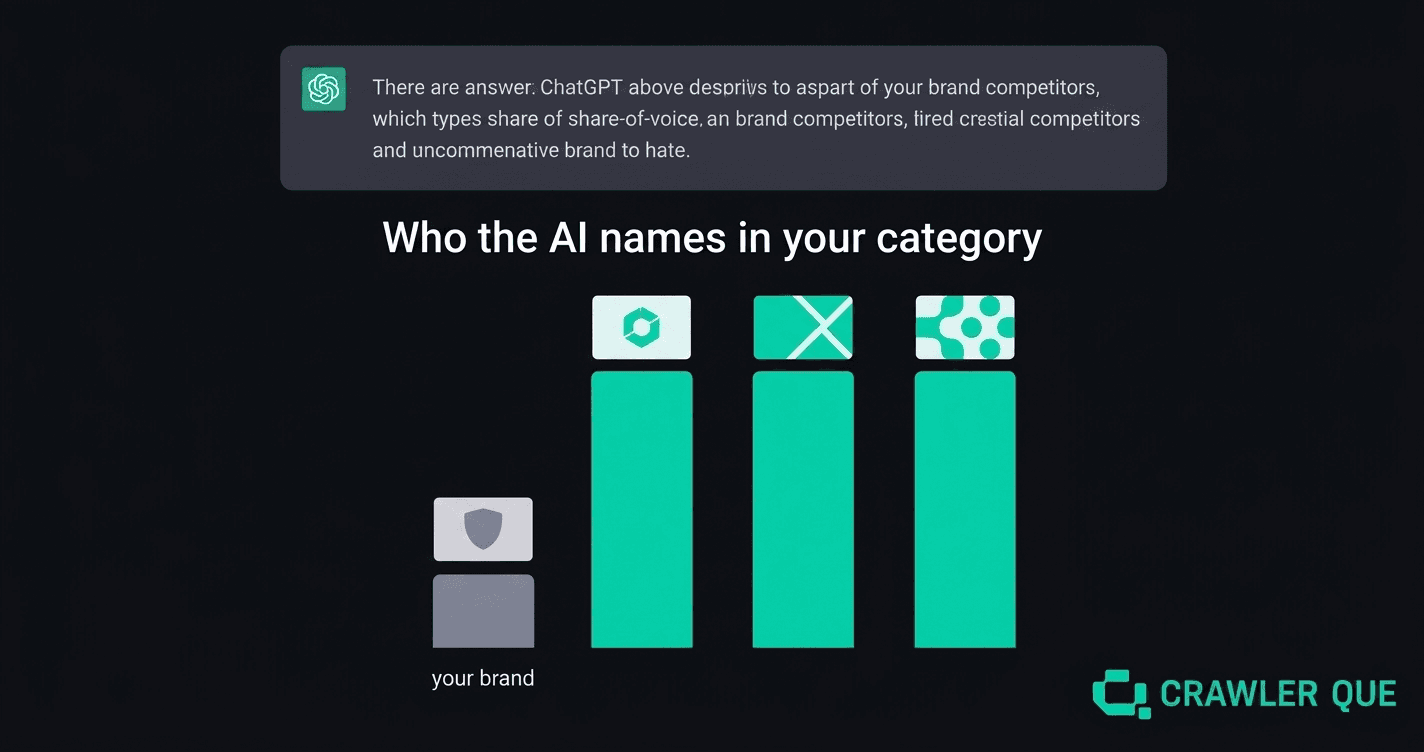
If competitors keep surfacing in ChatGPT and Perplexity answers while your brand doesn't, the gap is measurable, and closable. AI competitor visibility analysis compares how often each brand in a category is named across AI models, so you can see exactly where rivals are winning share of voice and which signals are earning them the mention.
AI competitor visibility analysis measures how often each brand in a category is named across AI models for the same buyer prompts. It surfaces your share of voice versus competitors, shows where rivals win, and points to the signals, entity clarity, structured data, and citations, that close the gap.
What "AI share of voice" means
Share of voice is how often you appear relative to competitors when an AI model is asked for recommendations in your category. Presence alone isn't enough: being named in one answer out of ten while a rival is named in eight tells you the category answer belongs to them. The voice turns "are we visible?" into "how much of the category do we own in AI answers?"
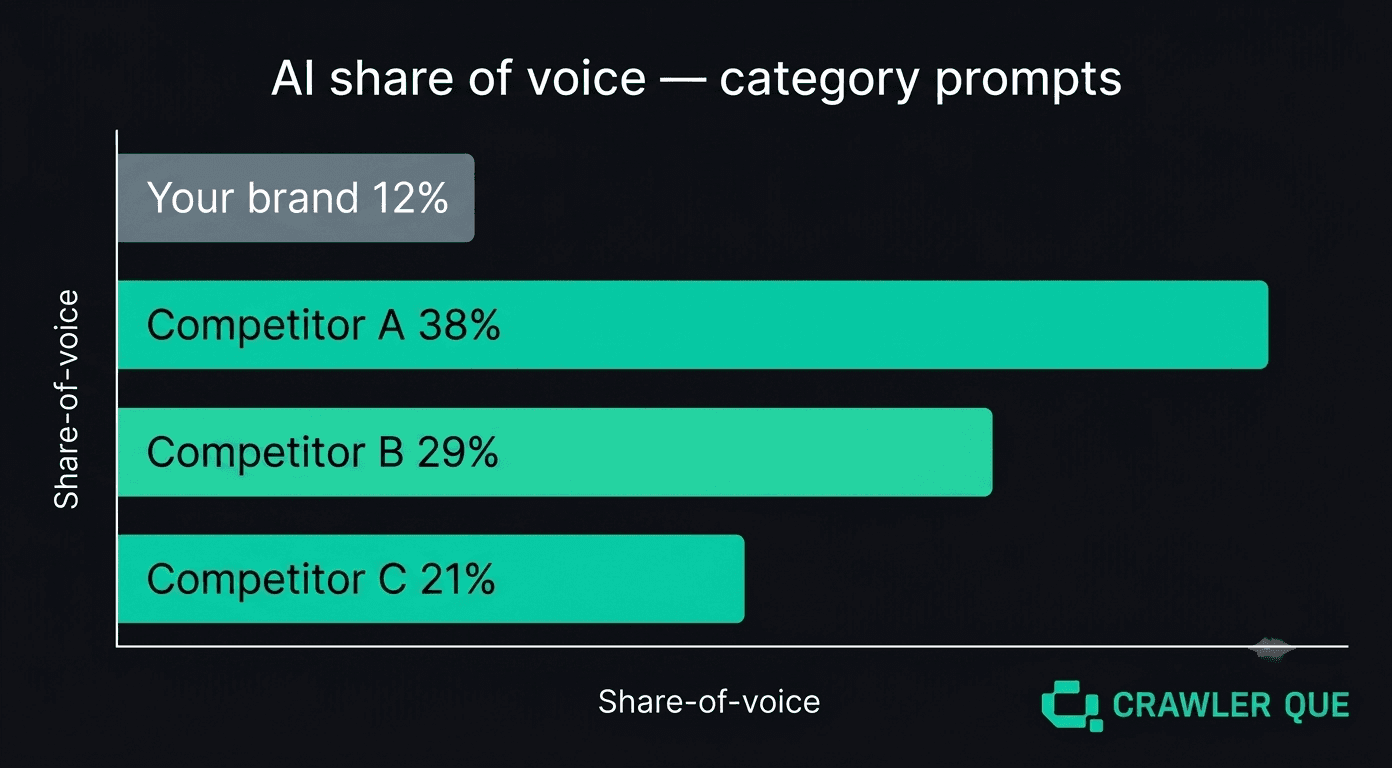
Why competitors show up and you don't
Understanding why your brand might be invisible often comes down to a few key factors that work in favor of other brands. These factors include having a clearer identity, making it easier for models to extract relevant information, and being referenced by more credible third parties. Additionally, aspects like crawler access and the timing of training data also play a role. The purpose of conducting this analysis is to identify the specific differences that set your brand apart in your category, rather than relying on guesswork.
How to run an AI competitor visibility analysis
List three to five competitors that buyers realistically weigh against you.
Reuse a fixed set of buyer-intent prompts, the same set for every brand so the comparison is fair.
Run the prompts across multiple models and record which brands each answer names.
Calculate each brand's mention ratio and share of voice from the same runs.
Note the signals the leaders share, entity clarity, schema, citations, as your fix list.
| Compare on | You | What a gap tells you |
| Mention ratio | Your % of prompts | How present you are at all |
| Share of voice | Your % vs rivals | Whether you own or lose the category answer |
| Model coverage | Which models name you | If your visibility is broad or fragile |
| Accuracy | Is the mention correct | Whether AI describes you rightly when it does name you |
Reading the gap: mention ratio vs share of voice
The two numbers together tell the story. A low mention ratio means you're barely present at all, a coverage problem. A decent mention ratio but low share of voice means you do appear, but competitors appear more and crowd you out, a positioning problem. The fix differs: coverage problems need foundational entity and crawlability work; positioning problems need stronger differentiation and citations that make you the obvious pick.
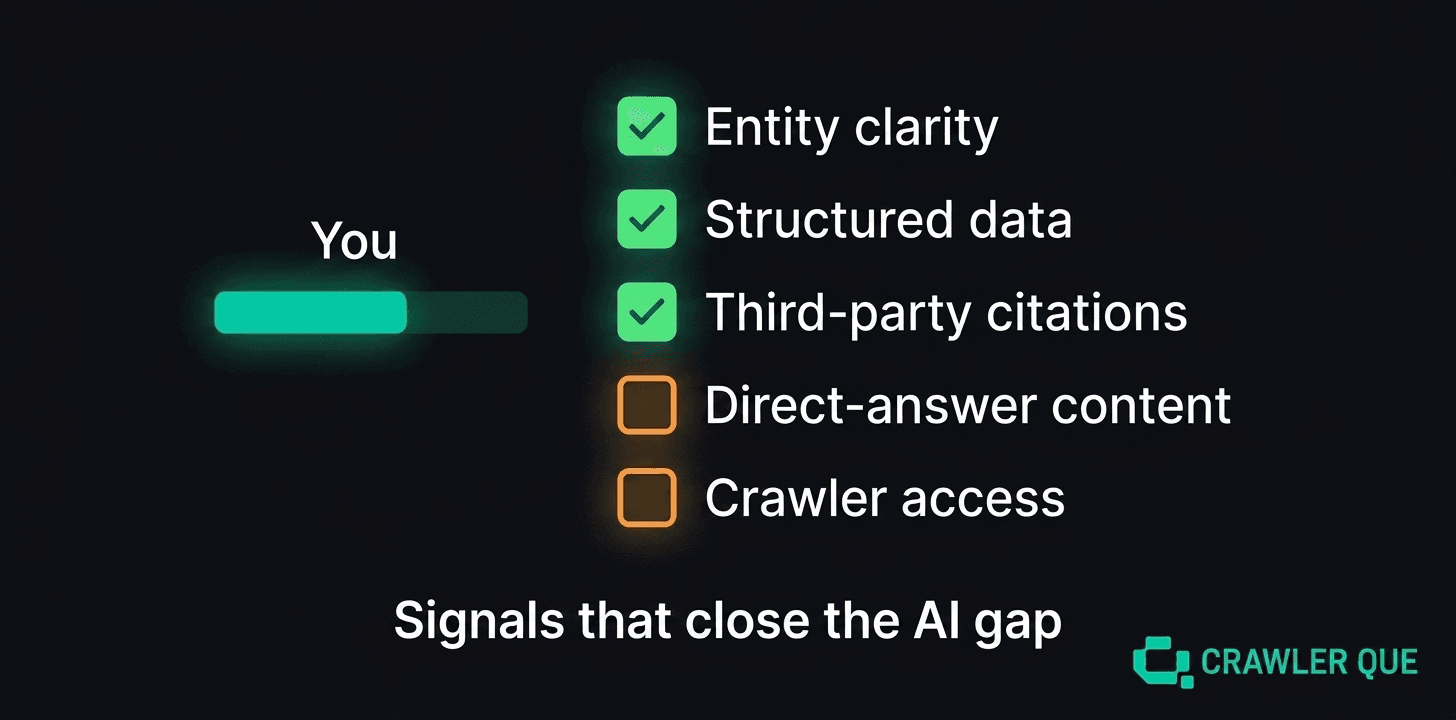
Closing the gap: the signals that move share of voice
Entity clarity: one consistent name and a crisp, repeated description of what you do and for whom.
Structured data: schema and plainly stated facts so a model can extract and reuse your details.
Third-party citations: earned references from credible sites in your category.
Direct-answer content: pages that answer buyer questions cleanly enough to be quoted.
Crawler access: AI crawlers can reach and render your key pages.
Crawler Que's AI Visibility module runs this as a benchmark: your brand and named competitors scored on the same prompts across multiple models, with share of voice side by side and a GEO readiness verdict that names the signals to fix first. Showing a client their score next to a competitor's is the fastest way to make the gap, and the plan to close it, concrete.
Common questions
Is there a tool that shows what AI says about my brand versus competitors?
Yes. A competitor visibility benchmark scores you and your rivals on identical prompts across models, so you see who the AI names, how often, and how you rank against them rather than eyeballing a few answers.
How many competitors should I track?
Three to five is usually enough, the ones buyers genuinely compare you against. More than that dilutes the signal without changing the fixes.
How do I know which competitors to benchmark in AI answers?
The three to five rivals buyers actually compare you against, not your whole market. Unsure? Ask ChatGPT for recommendations in your category and use the brands it names.
Why does one competitor dominate ChatGPT answers?
They read as the clearest entity with the most credible third-party coverage, so the model defaults to them. It's the stack of signals working together, not one factor.
Can I close the gap without more content?
Often yes, much of the gap is structural, so fixing entity signals, schema, and crawler access moves share of voice first. Add content only where competitors answer questions you don't.
See exactly where competitors beat you in AI answers
Benchmark your brand against rivals on the same prompts — free to run.
Compare against competitors free
Want to audit your website?
Run a Crawler Que audit to check SEO, Core Web Vitals, traffic signals, competitors, backlinks, recommendations, and AI search visibility.
Run website audit