
AEO
How to Improve Your Brand's Visibility in ChatGPT (2026 Playbook)
An 8-step playbook for getting your brand mentioned in ChatGPT: entity clarity, schema done right, third-party mentions, and how to monitor progress over time.
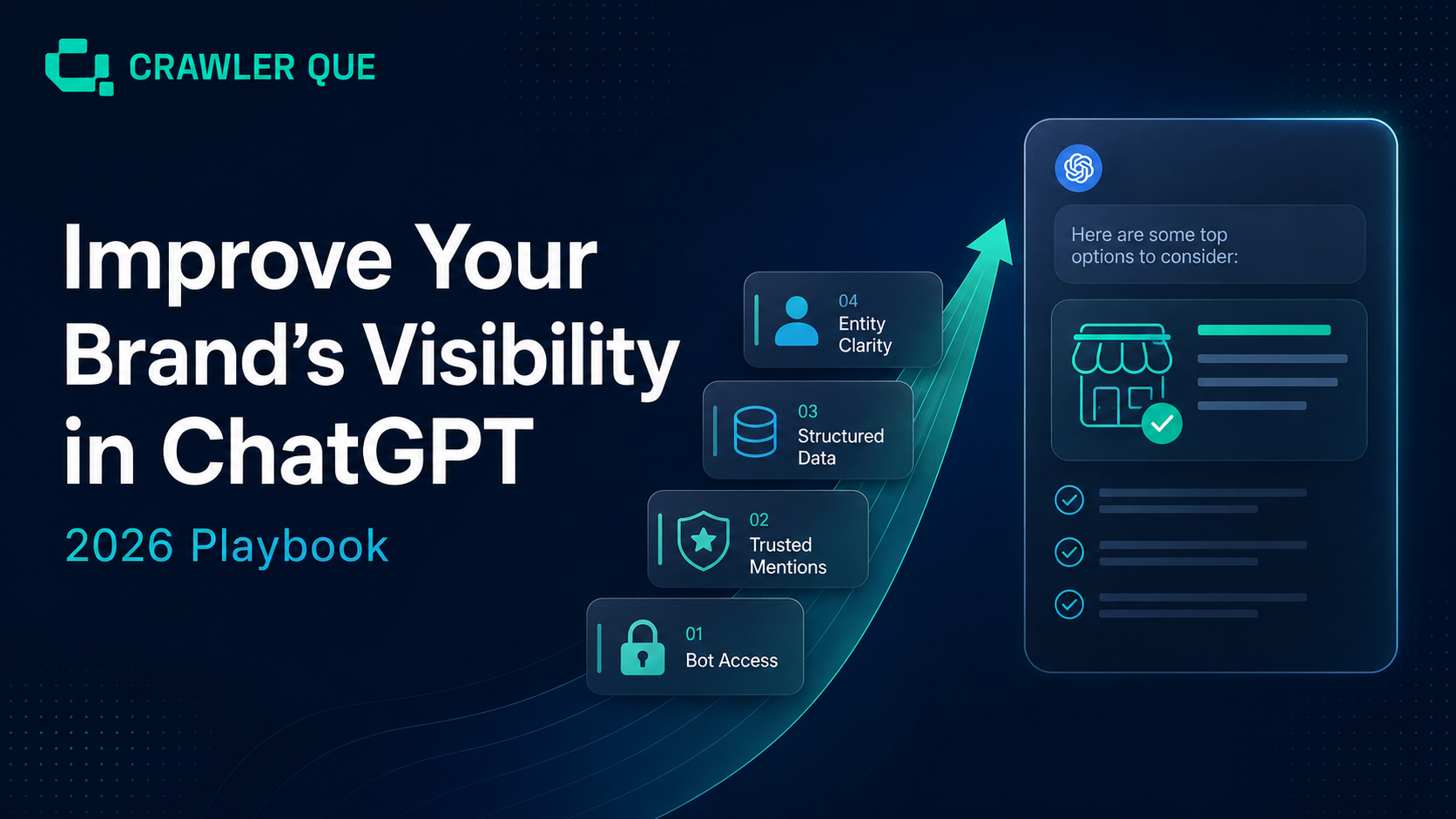
Most guides to "getting mentioned in ChatGPT" repeat the same three lines: write good content, build authority, be patient. None of that tells you what to actually do on a Tuesday afternoon. This is the version with steps you can assign to someone on your team this week, in the order that actually moves the needle, using the free ChatGPT visibility checker to see where you're starting from before you touch anything.
One thing worth saying upfront: nobody, including OpenAI, sells placement inside ChatGPT's answers. There is no ad slot. What you're doing instead is making your brand easier for the model to find, trust, and repeat across the specific sources it actually draws from.
Key Takeaways
ChatGPT pulls brand information from four distinct layers: training data, live web search, cited third-party sources, and structured entity data. You influence three of the four; only training data is out of your control on any short timeline.
Schema markup helps Google AI Overviews meaningfully, because AI Overviews sit on top of Google's existing index. Its effect on ChatGPT and Perplexity is smaller and less direct, since both rely more on live retrieval and plain-text parsing than on your JSON-LD.
Third-party mentions on Reddit, Quora, G2, and review sites carry more weight than most brands assume, because AI models treat repeated independent descriptions as a trust signal in a way a single homepage claim never gets.
This is not a project with an end date. Brands that check once, fix a few things, and stop tend to lose ground within a couple of months as competitors keep publishing and models keep updating.
Where ChatGPT's Brand Data Actually Comes From
Before changing anything, it helps to know what you're actually influencing. ChatGPT assembles an answer from four layers stacked on top of each other, and they don't carry equal weight.
Training data is the base layer: everything the model learned during pretraining, frozen at a point in time. You can't edit this directly, and you can't buy your way into it. The only lever here is time. Getting mentioned consistently across the web today increases the odds your brand shows up more clearly in whatever model gets trained next.
Live web search results sit above that. When ChatGPT uses browsing to answer a current question, it's pulling from something closer to a real-time index, which behaves more like traditional SEO than people expect. If your page doesn't rank, it's less likely to get pulled into the answer at all.
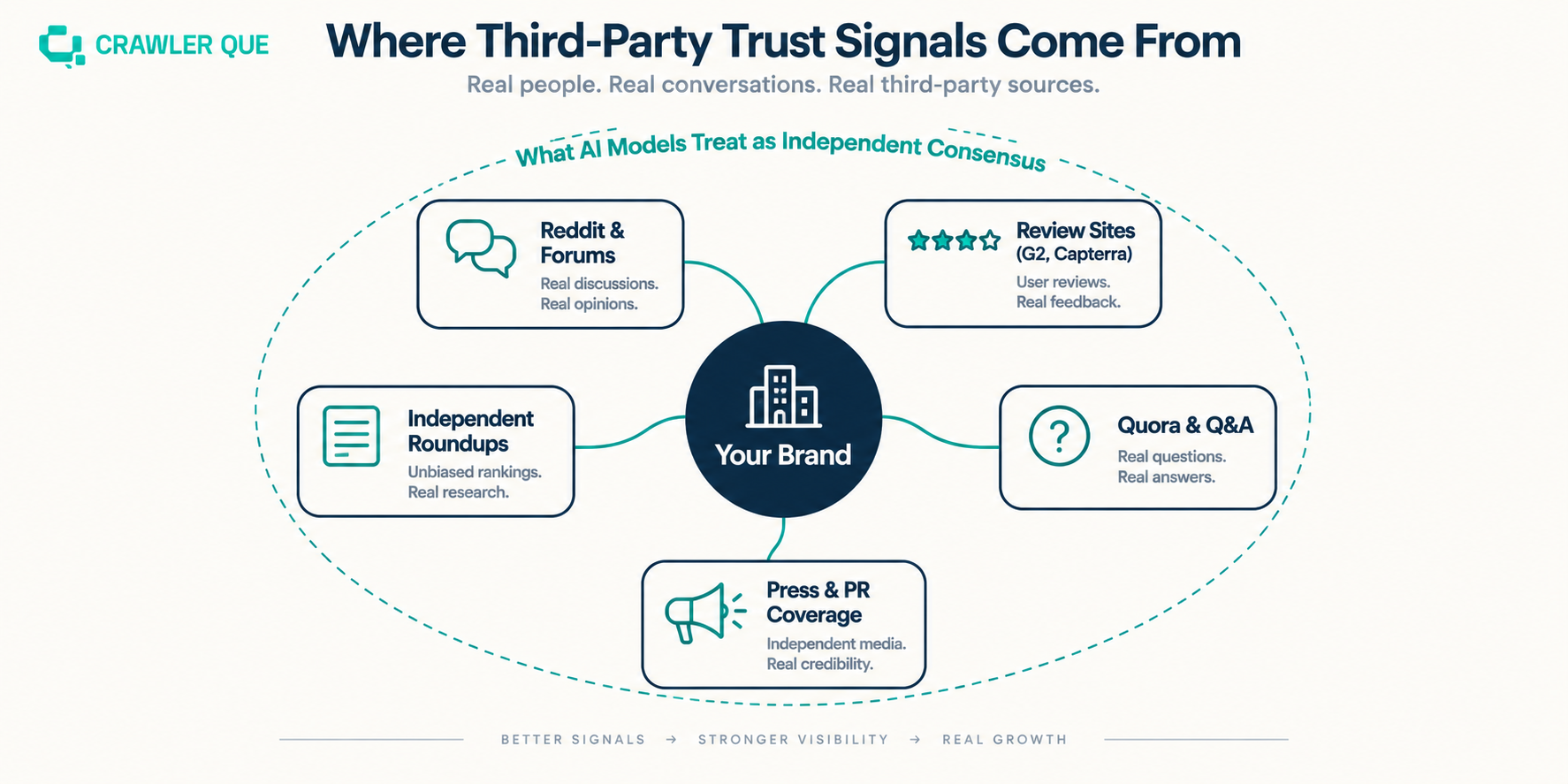
Cited third-party sources are the layer most brands underinvest in. Reddit threads, Quora answers, G2 and Capterra reviews, and independent roundup articles shape what the model treats as consensus. A brand that only exists on its own website looks thin to a system trying to verify a claim against multiple independent sources.
Structured entity data is the thinnest layer but the clearest one: schema markup, Wikidata entries, and consistent NAP (name, address, phone) or organization details that explicitly tell a machine what you are, rather than making it infer.
If you want the deeper mechanics of why a brand can rank fine in Google and still be invisible in ChatGPT specifically, this explainer walks through the gap in more detail.
The 2026 Playbook: 8 Steps in the Order That Actually Works
Step 1: Get a Real Baseline Before You Change Anything
Ask ChatGPT, Claude, and Gemini the 10 to 20 questions your actual buyers ask (not your brand name; the category question, like "best tools for X"). Record whether you're named, how you're described, and who gets named instead. Without this, you're optimizing blind and won't know if step 3 or step 6 is the one that actually moved your numbers.
This guide covers how to run that check with a repeatable scoring method, and the AI Brand Checker walkthrough covers the multi-model version so you're not just checking one platform.
Step 2: Fix Entity Clarity Before Anything Else
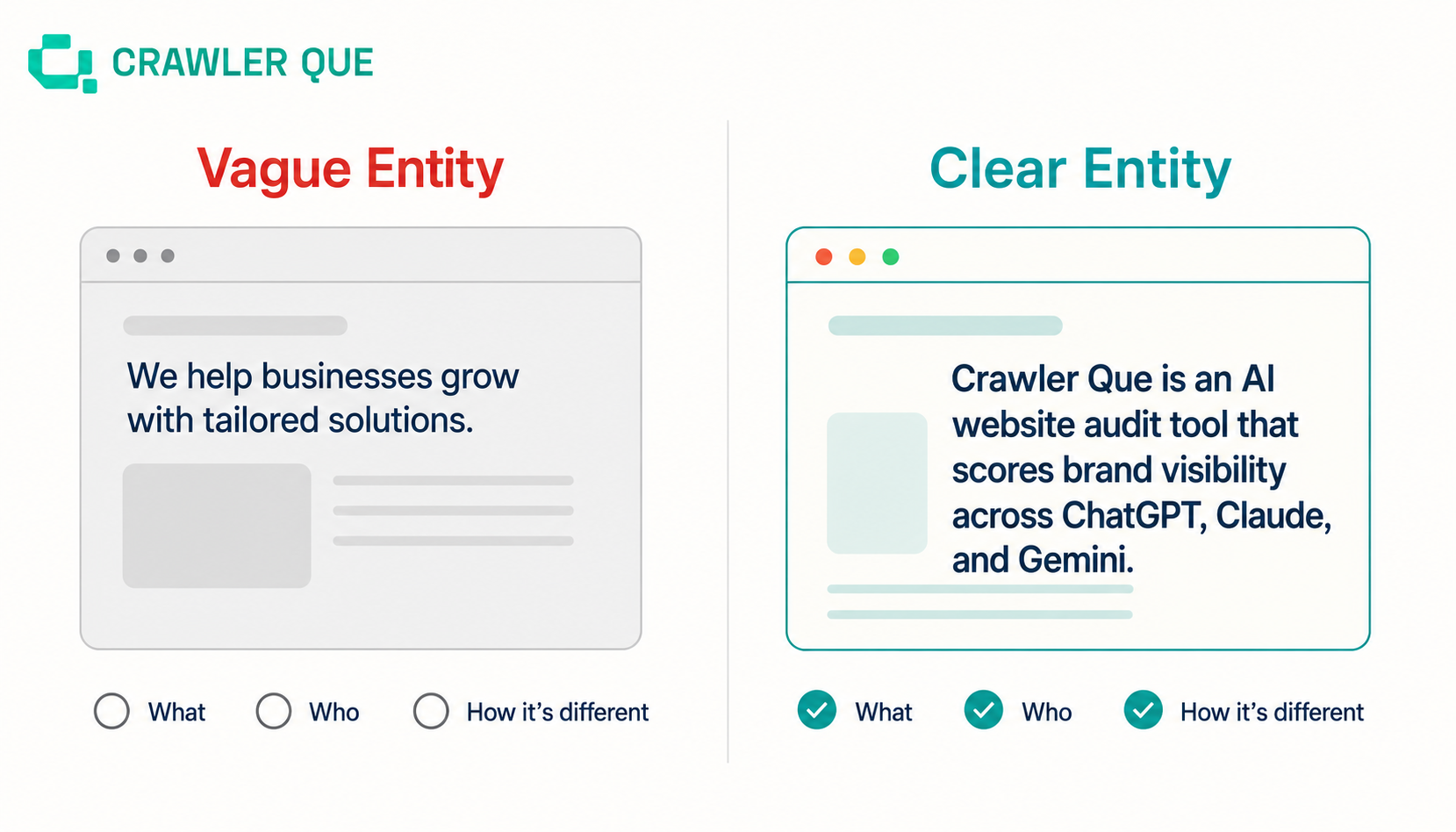
This is the step most brands skip because it feels too basic, and it's the one that undercuts every other step if it's wrong. AI models work with entities: named things with defined attributes. If your homepage says "innovative solutions for modern businesses," a model has almost nothing to extract.
Rewrite your core pages (homepage, About, product pages) to explicitly state, in plain sentences: what you are, who you serve, what problem you solve, and what makes you different from the two or three brands you're actually competing with in a buyer's mind.
Do this consistently across every page a model might retrieve, not just once on the About page. Repetition of the same clear description, in your own words, across your own site is what turns a vague impression into a stable entity.
Step 3: Add Structured Data, With Realistic Expectations
Here's where most advice oversells. Schema markup does help, but not evenly across platforms, and it's worth understanding why before you spend a week implementing it.
| Platform | How it uses schema | What that means for you |
| Google AI Overviews | Built on Google's existing index, which already relies on structured data for rich results and Knowledge Graph entries | Schema has a real, evidenced effect here |
| ChatGPT | Reads live pages mostly as plain text during browsing; doesn't confirm deep JSON-LD parsing | Helps indirectly at best; don't expect a direct citation bump |
| Perplexity | Retrieval-based, similar caveats to ChatGPT | Same: implement for the SEO benefit, not a guaranteed AI citation |
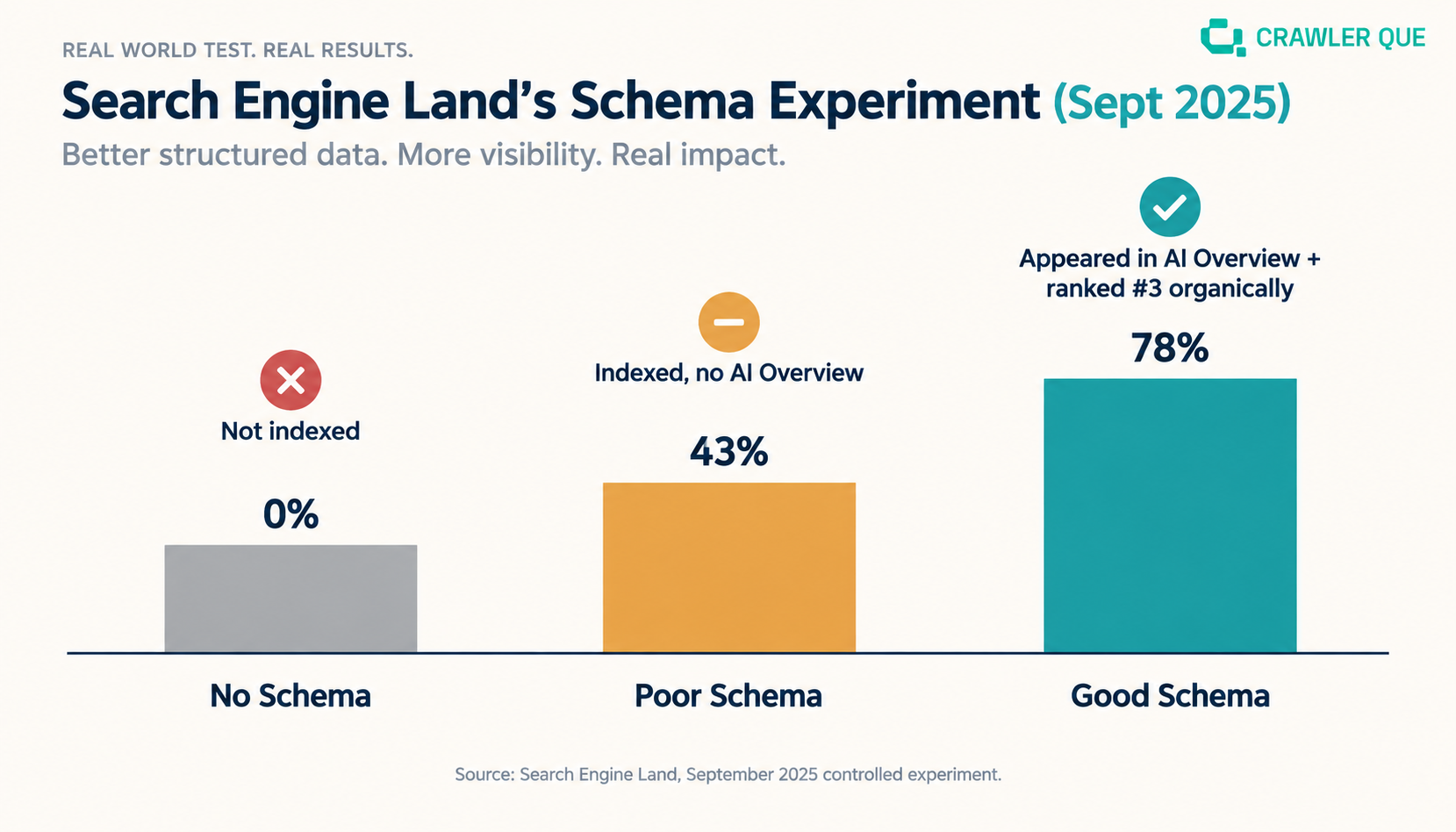
A controlled experiment run by Search Engine Landmakes the Google case concrete: three near-identical pages were built with well-implemented schema, poorly implemented schema, and no schema at all. Only the well-implemented page appeared in a Google AI Overview, and the no-schema page wasn't even indexed. That's a real, measured gap, not a theoretical one.
But afollow-up piece from the same publication is honest about the limits: Google and Microsoft Bing have both confirmed they use structured data to inform AI features, but neither ChatGPT nor Perplexity has confirmed the same, and both behave more like plain-text retrieval engines. The practical takeaway: implement Organization and Product schema properly (Google's own structured data documentation has copy-paste JSON-LD examples), because it's close to free and genuinely helps your Google AI Overview odds, but don't treat it as a ChatGPT citation lever on its own.
Step 4: Build Topical Authority, Not a Single Great Page
ChatGPT doesn't recommend brands based on one strong article. It recommends brands that show consistent depth across a full topic. If you sell AI visibility software, one blog post about "AI visibility" isn't enough; you need coverage of what it means, how to measure it, why brands lose it, how to fix it, and how it compares to traditional SEO, all published and internally linked as a connected body of work. Our own guide to GEO breaks down what "topic over keyword" targeting actually looks like in practice.
A practical test: list the 8 to 10 sub-questions a genuinely curious buyer would ask about your category. If you can't point to a specific page answering each one, that's your content roadmap for the next quarter, not a vague "publish more" goal.
Step 5: Earn Third-Party Mentions Where AI Already Listens
This is the step with the highest leverage and the one that takes the longest to compound. AI models weigh independent, repeated descriptions of your brand more heavily than anything you say about yourself. Specific places worth working, in rough order of effort-to-payoff:
Reddit and niche forums. Answer real questions in communities your buyers already use, without pitching. A genuine, upvoted explanation of your product's tradeoffs does more for AI trust than a press release.
Review platforms (G2, Capterra, TrustRadius). These sites are heavily cited by retrieval-based models because they're structured, comparison-friendly, and update constantly. G2's own 2026 research shows how central these platforms have become to buyer research generally, which is exactly why models lean on them.
Independent roundups and "best of" articles. Getting included in a few genuinely independent comparison posts (not paid placements) gives a model multiple external sources describing you the same way.
Quora and Q&A sites. Lower effort, lower payoff individually, but cheap to do consistently.
The common thread: none of this is about volume. Five genuinely independent, accurate mentions across different source types outperform fifty mentions on sites nobody actually cites.
Step 6: Structure Content So It Can Be Extracted, Not Just Read
A model pulling an answer together favors content it can lift cleanly. That means: answer the actual question in the first sentence of a section, not the third paragraph. Use specific numbers instead of vague claims ("cuts audit time from 3 hours to 12 minutes" beats "saves significant time").
Avoid burying a direct answer inside a long narrative paragraph when a short, quotable sentence would say the same thing more usefully to both a human skimmer and a model looking for a clean fact to cite.
Step 7: Know Where You Stand Against Named Competitors
Visibility isn't pass/fail; it's relative. Being named 40% of the time sounds fine until you learn a competitor is named 85% of the time on the same prompts. This competitor visibility breakdown covers how to run that comparison directly, so you know whether you're actually closing a gap or just moving in place while a competitor moves faster.
Step 8: Monitor on a Schedule, Because This Isn't a One-Time Project
AI models update. Competitors publish. A visibility check from three months ago tells you almost nothing about where you stand today. Set a recurring cadence (weekly or biweekly) using either a manual cross-platform check or an automated dashboard, and treat drops in your score as a signal to revisit steps 2 through 6, not a reason to start over from scratch.
See a full sample AI visibility report →
Frequently Asked Questions
How do I boost my brand's overall visibility?
How do I boost AI visibility specifically?
How do I increase a website's visibility in search results?
What's the formal name for the process of improving a site's visibility in search engines?
How do I get 1,000 views on a website?
Is SEO dead now that AI answers questions directly?
The Bottom Line
None of these eight steps is exotic. Entity clarity, structured data, topical depth, third-party mentions, extractable writing, competitor benchmarking, and ongoing monitoring are all things a marketing team can actually execute without needing a research lab. The brands that pull ahead in 2026 aren't the ones that found a secret trick; they're the ones treating this as a standing discipline instead of a one-time audit.
Run a free audit and see where you stand today →https://crawlerque.com/ai-search-visibility
Want to audit your website?
Run a Crawler Que audit to check SEO, Core Web Vitals, traffic signals, competitors, backlinks, recommendations, and AI search visibility.
Run website audit